
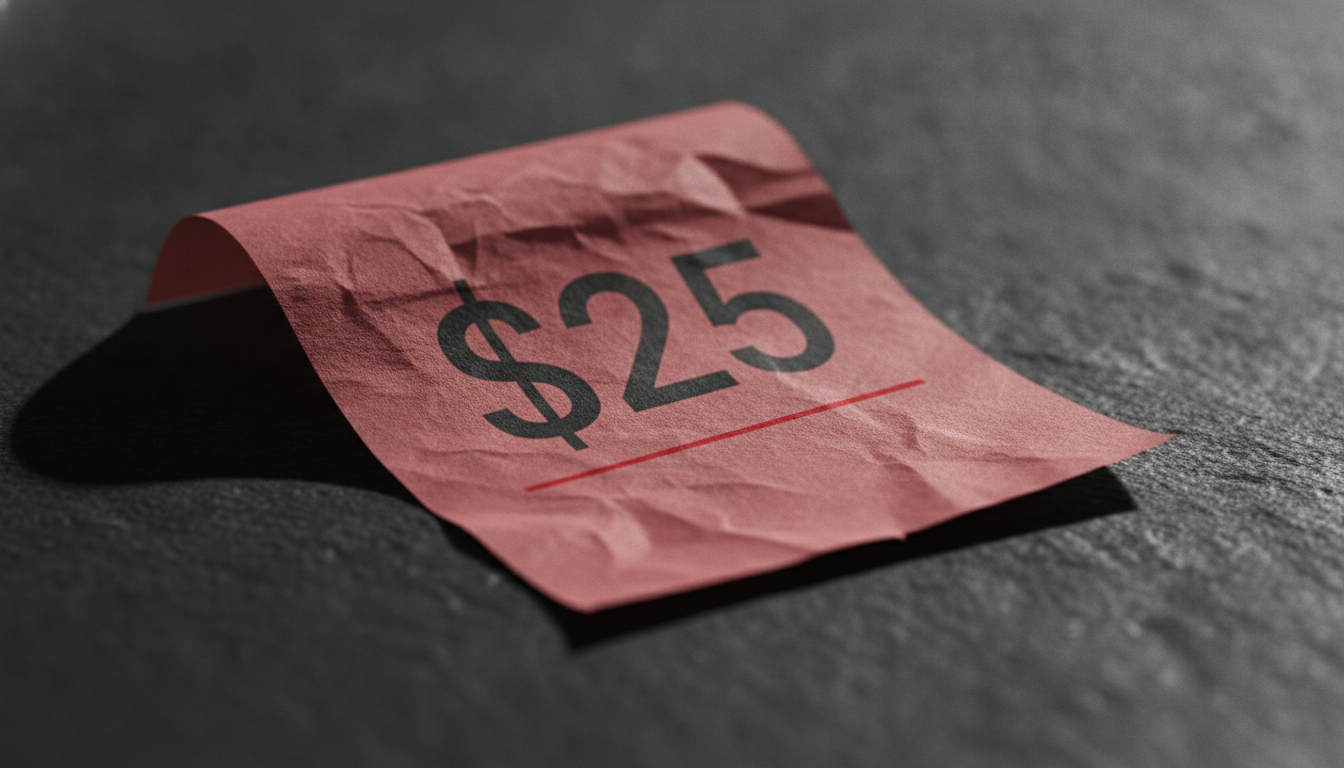
It’s the Tuesday-night planning call, the flyer is almost done, and then the treasurer asks the question that stops the meeting: “Okay, but after the fees… what do we actually keep on a $25 ticket?” Silence. Somebody says “like ninety percent?” Somebody else says “I think they take five dollars.” Nobody knows. Consider this event ticketing fees explained the way your treasurer wants it — with actual arithmetic, not fine print.
We’ll run real numbers on a $25, $50, and $100 ticket, show who pays what, and pin down exactly when the money lands in your account. Bring a calculator if you want, but you won’t need one.
Event ticketing fees explained: there are only two
Every paid ticket on EventPassHero involves exactly two fees, and you can see both coming from a mile away:
- The EventPassHero platform fee: 2.75% + $1.49 per ticket. That covers the event page, the QR tickets, the check-in app, the marketing tools, the reporting — the whole platform.
- Stripe’s payment processing fee: 2.9% + $0.30. That’s the card fee, and it’s not ours — it’s the same processing fee every platform that runs on Stripe passes through. We add no markup to it.
That’s the whole list. No monthly fee, no contract, no setup fee, no “premium tier” you discover three weeks before the gala. If you don’t sell a ticket, you don’t pay a dime.
EventPassHero’s platform fee is 2.75% + $1.49 per ticket. Here’s what that comes to at three common price points:
- $25 ticket → platform fee of $2.18
- $50 ticket → platform fee of $2.87
- $100 ticket → platform fee of $4.24
Stripe’s processing fee (2.9% + $0.30) applies separately at checkout — the same card fee you’d pay anywhere.
Notice what happens as the price climbs: the flat $1.49 matters less and less. On a $25 ticket the platform fee works out to about 8.7% of face value. On a $100 ticket it’s 4.2%. The math gets friendlier as your event gets bigger — which is exactly how it should work for a gala or a scholarship banquet.
Pass the fees (the default): $25 means $25
Out of the box, EventPassHero passes the fees to the buyer. Your guest sees the $25 ticket, and at checkout the platform fee and Stripe’s processing fee are added on top — clearly itemized, no surprises. Your buyer covers the cost of the machinery; you keep the full face value.
So the math on your side is the easiest math you’ll do all week. Sell 200 tickets at $25? That’s $5,000 moving toward your account. Sell 80 VIP tickets at $100? That’s $8,000. The number on the flyer is the number in your books, and your treasurer can reconcile the whole event on one line.
When the buyer covers the fees, a $25 ticket puts $25 in your account. The flyer math and the bank math finally agree.
And here’s the honest read on how buyers react: they’re used to it. Service fees at checkout are how nearly every ticket on the internet works. A couple of clearly labeled dollars on a $25 ticket doesn’t stop your cousin from coming to the day party.
Absorb the fees: one toggle, a cleaner sticker price
Maybe you want the price on the flyer to be the price at checkout — period. Flip one switch and EventPassHero absorbs the fees into your side instead. It’s a single per-event toggle, so your members-only brunch can absorb while your public concert passes fees, and neither setting touches the other event.
Here’s the same honesty in the other direction: absorbing isn’t free, it just moves the cost. On a $25 ticket, the $2.18 platform fee now comes out of your take — so you keep $22.82 of face value, less Stripe’s processing fee (2.9% + $0.30), which also comes from your side in absorb mode. Cleaner sticker price, thinner margin.
The classic move if you absorb: build the fees into the price. Charge $28 instead of $25, keep the checkout total clean, and protect your fundraising goal. There’s no wrong answer here — pass-fees maximizes what you keep, absorb maximizes sticker simplicity. You get to choose per event, and you can change your mind for the next one.
The timing math: paid while you’re still selling
Fees are only half of event math. The other half is when the money shows up — and this is where a lot of organizers have been quietly getting a bad deal for years.
EventPassHero pays out daily through Stripe, and each sale lands in your bank account 2–3 business days after the transaction. Sell tickets on Monday, see that money mid-week. Sell more on Thursday, it lands early the next week. There’s no escrow holding your revenue hostage until the event ends, no minimum balance to clear, no payout button to remember to click. It just flows, sale after sale, for the entire life of your event.

Compare that with how much of the ticketing world still works: platforms that hold every dollar until after your event wraps. Sell out in March for a May gala, and your own revenue sits in someone else’s account while you front the venue deposit, the caterer, and the printing out of the chapter treasury — or your personal card. The math on paper looks the same; the math in your checking account is very different.
Deposits, DJs, and decorations all invoice before the doors open. Getting paid as you sell means your event funds itself — no month-end surprises, no floating the whole thing and praying reimbursement day comes quickly.
Common questions
Who pays the fees — me or my buyers?
Your choice, per event. By default, buyers pay: the platform fee and Stripe’s processing fee are added at checkout and you keep the full ticket price. Flip the absorb toggle and the fees come out of your side instead, so the sticker price is the checkout price. One switch covers the whole event.
What does a $25 ticket actually cost my buyer?
In the default pass-fees mode, your buyer pays the $25 face value plus the $2.18 platform fee, plus Stripe’s card processing fee of 2.9% + $0.30 — all itemized at checkout. The exact total varies slightly with the cart, but every line is visible before they pay.
What do I keep if I absorb fees?
On a $25 ticket, the $2.18 platform fee comes out of your side, leaving $22.82 of face value, and Stripe’s processing fee (2.9% + $0.30) is also deducted from your side. Many organizers who absorb simply build a couple of dollars into the ticket price to cover it.
When does the money hit my account?
Payouts run daily through Stripe, and each sale lands in your bank account 2–3 business days after the transaction. There’s no hold until the event ends, no minimum payout threshold, and nothing to request — once your bank is connected, deposits arrive automatically as tickets sell.
Are there monthly fees or contracts?
No. EventPassHero has no monthly fee, no contract, and no setup cost. The only charges are the per-ticket platform fee (2.75% + $1.49) and Stripe’s standard processing fee (2.9% + $0.30) when a ticket actually sells. No sales, no fees — and you can walk away anytime.
Related reading
- Absorb or pass ticket fees? How the per-event toggle works
- Get paid in 2–3 days, not after the event
- How to price event tickets (a framework that protects your goal)
The bottom line
A $25 ticket on EventPassHero carries a $2.18 platform fee and Stripe’s standard card fee — and in the default setup, your buyer covers both, so you keep the full $25. If you’d rather absorb, it’s one toggle and you know the tradeoff to the penny. Either way the money arrives on a daily payout schedule, 2–3 business days behind each sale, while your event still needs it. That’s the whole equation. No asterisks.
Ready to run the numbers on your own event? Create your event and set your fee mode in one click, or book a quick demo and we’ll walk through the math on your actual ticket prices together.

Raise More Money With Less Stress.
Sell more tickets. Stay in control. Built for organizations that move the community.
Start selling tickets →