

You already know who should be sponsoring your gala. The bank with the branch on MLK Boulevard. The hospital that keeps saying “community outreach” in its ads. The alumna who owns that accounting firm downtown. What’s missing isn’t the sponsors — it’s the package. Most community organizations ask for sponsorship with a paragraph and a prayer, when what wins the meeting is real event sponsorship packages: clear tiers, concrete deliverables, and proof afterward that the money did what you said it would.
Here’s the mindset shift that changes everything: sponsors don’t buy ads. They buy three things — your audience, your story, and a chance to show up in person in front of people they want to know. Build your ask around those three, and “let me check the budget” starts turning into “who do I make the check out to?”
What sponsors are actually buying
Put yourself on the other side of the table. A regional bank’s marketing manager gets a dozen sponsorship requests a month. The ones that go in the trash all sound the same: “support our event, logo on the flyer.” The ones that get funded answer three questions before they’re asked:
- Who will be in the room? “300 attendees” is weak. “300 attendees — alumni professionals, chapter members, and their families, most of them local homeowners and small-business decision-makers” is a marketing budget’s dream.
- What does the money accomplish? Sponsors want a story they can retell in their own community-impact report. Give them one with numbers in it.
- What do we actually get? Specific, listed, countable deliverables — not “exposure.”
Build event sponsorship packages with real deliverables
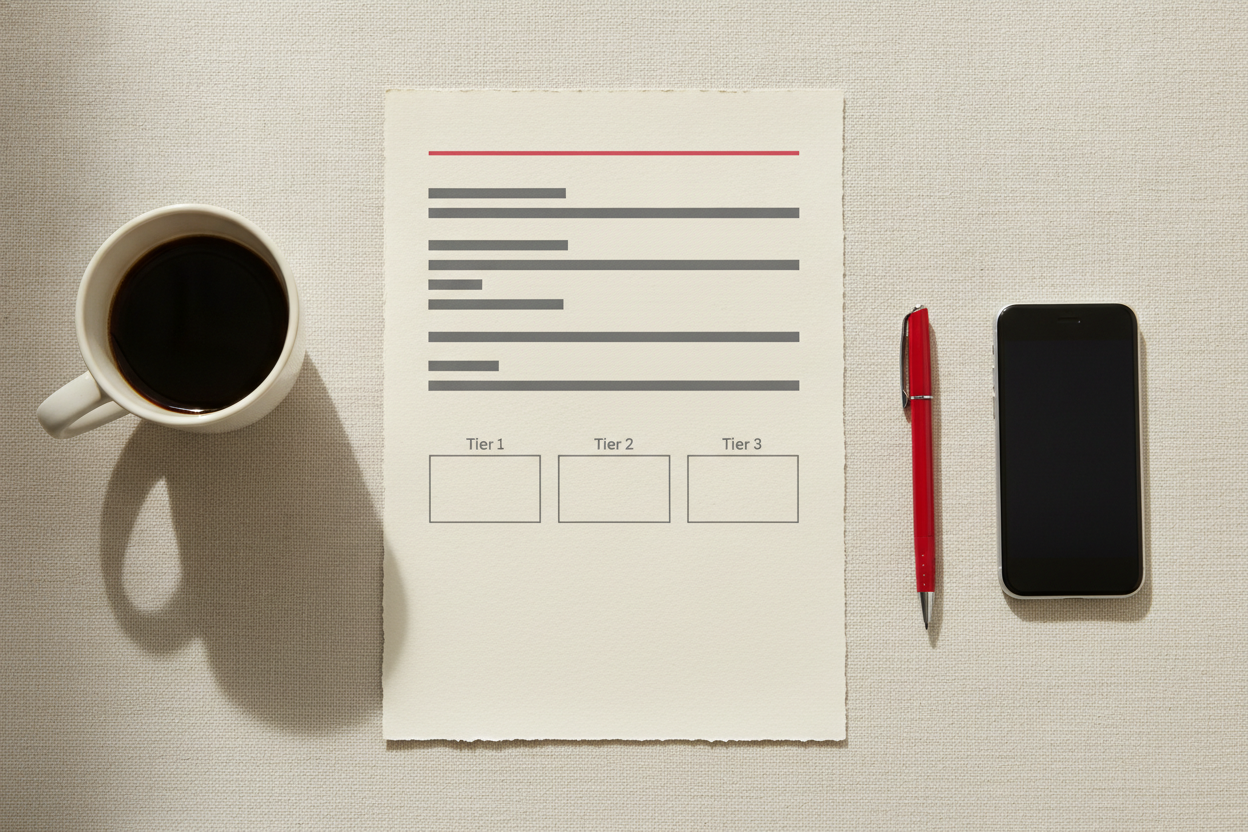
Three tiers is plenty. Each tier should be a short, concrete list a sponsor can read in ten seconds and cost out in their head. Here’s a realistic ladder for a chapter scholarship gala:
Community Partner — $500. Logo on the event page, a mention in the printed program, and 2 tickets.
Gold Sponsor — $1,500. Logo on the event page, an on-stage thank-you from the podium, a reserved table of 8, and shout-outs in your email and social promotion.
Presenting Sponsor — $5,000. “Presented by” billing, top logo placement on the event page, an on-stage welcome moment, two premium tables, a booth or display table at the event, and first right to renew next year.
Notice what makes these work: every line is something you can point to afterward. A logo either appeared or it didn’t. A table either sat eight guests or it didn’t. Vague benefits create awkward renewal conversations; countable ones create receipts.
Package the story, not just the perks
The tier sheet gets you the meeting. The story closes it. One page: who your audience is, what the event means to your community, and — most important — what the money does, in numbers.
“Proceeds support our scholarship fund” is wallpaper. “Last year this gala funded six $2,000 scholarships for first-generation college students from three local high schools — this year we’re going for eight” is a sentence the bank’s marketing manager will repeat to her boss word for word. Scholarship counts, coats collected, students mentored: specific beats noble, every time.
Sponsors don’t renew because the event was nice. They renew because you proved the room was real and the money did something.
Where EventPassHero does the heavy lifting
You don’t need sponsorship software. You need your ticketing platform to deliver the promises your tier sheet makes — and this is exactly where EventPassHero earns its keep:
- Logos on a branded event page. Your event page carries your logo, your colors, your hero banner — and your sponsor logos, right where every single ticket buyer sees them. “Logo placement” stops being a promise and becomes a URL you can text the sponsor the day it goes live.
- Sponsor tables sold as bundles. That Gold-tier table of 8 is one purchase that automatically splits into eight individual QR tickets. The sponsor buys once; each of their guests gets their own ticket and walks through the door scanning their own code — no forwarding one confirmation email around the office.
- Custom checkout fields for guest names. Add a required field and capture each sponsor guest’s name and email at checkout. Your check-in list is clean, your thank-you list writes itself, and nobody is standing at the door saying “I’m with the bank’s table… I think.”
- Reports that prove the room. After the event, your attendance and check-in reports show exactly how many people came — which is the evidence your renewal pitch is built on.
The ask: who, when, and how often to follow up
Who to ask. Start local and start warm. Banks and credit unions (community reinvestment is literally part of their mandate). Hospitals and health systems. Black-owned businesses that serve your neighborhood. Alumni-owned firms — the accountant, the realtor, the attorney who came up through your chapter. Insurance agents, funeral homes, car dealerships: businesses that live on local trust sponsor local events. Your own membership is your best prospect list; ask who works where.
When to ask. Three to six months before the event. Corporate and small-business budgets get committed early — ask in the same quarter as your event and you’re asking for leftovers. For an annual event, the single best time to open next year’s conversation is two weeks after this year’s event, recap in hand.
How to follow up. Silence usually means busy, not no. A rhythm that respects everyone’s time: the ask, a follow-up email a week later, a phone call a week after that, and one final “we’re finalizing the program on the 15th — want to make sure we hold your spot” note. Four touches, then move on gracefully. And always ask for the meeting, not the money — packages close in conversations, not inboxes.
The recap that gets sponsors to renew
Two weeks after the event, send every sponsor a one-page recap: final attendance from your reports, a photo of their logo on the event page and their table full of guests, the impact number (“your sponsorship helped fund eight scholarships”), and one line about next year. That single page does more for renewals than any pitch deck — because now you’re not promising a room, you’re showing them the one they already stood in.
Common questions
How much should I charge for sponsorships?
Anchor to the value of the room, not your costs. For a 200–400 person community event, $500 / $1,500 / $5,000 is a realistic three-tier ladder. Price the top tier high enough that one “yes” changes your budget — presenting sponsors expect to pay real money for real billing.
What goes in a sponsor package?
Countable deliverables only: logo on the event page, tickets or a reserved table, an on-stage mention, a booth or display table, social and email shout-outs. Skip vague promises like “brand exposure.” If you can’t photograph it or count it afterward, leave it out of the package.
When should I start asking sponsors?
Three to six months before the event — budgets commit early, and late asks get leftovers. For annual events, open next year’s conversation two weeks after this year’s event, when your recap is fresh and the sponsor just watched a full room enjoy their money at work.
How do I prove value to sponsors afterward?
Send a one-page recap within two weeks: final attendance and check-in numbers from your EventPassHero reports, a photo of their logo on the event page and their guests at the event, and the impact figure their money supported. Proof in hand is what turns one-year sponsors into every-year sponsors.
Can sponsors get their logo on the ticket page?
Yes. EventPassHero event pages are custom-branded, and sponsor logos display right on the page every buyer visits to purchase tickets. That means sponsor visibility starts the day tickets go on sale — weeks before the event — not just on a banner the night of.
Related reading
- Custom-Branded Event Pages — where those sponsor logos live.
- Sell Table Bundles as Individual Tickets — how one sponsor purchase becomes eight QR tickets.
- Founders’ Day Banquet Planning — the event most sponsor tables are built for.
The bottom line
Corporate sponsors are not a lottery ticket — they’re a sales process with a short pitch and a long memory. Build three tiers with deliverables you can count, tell the story with real numbers in it, ask warm and ask early, and let EventPassHero handle the proof: the branded page with their logo, the table that splits into named guest tickets, and the attendance report that makes next year’s renewal a formality.
Ready to give sponsors something worth saying yes to? Create your event and add your sponsor logos today, or book a quick demo and we’ll walk through sponsor tables, checkout fields, and reports together.

Raise More Money With Less Stress.
Sell more tickets. Stay in control. Built for organizations that move the community.
Start selling tickets →